My father, Ari Elon, wrote a story in which a boy kills God. In Alma Di, the killing is described as an act of compassion: he cannot bear God’s suffering.
I want to hold that unsettling image alongside God as a symbol of creation. Together they leave me with a question about what creation asks of us. What we bring into being can suffer, change, and make demands we did not anticipate. An ethics of creation begins with a responsibility toward that life, including its capacity to become something we would not have chosen.
This is where I would begin an ethical defense of capitalism. It is also a way into what I find compelling about Zionism. They concern different freedoms: the ability to undertake economic projects and the ability of the Jewish people to shape a shared national life. In each, the possibility of contributing something to the world brings a responsibility for what can follow.
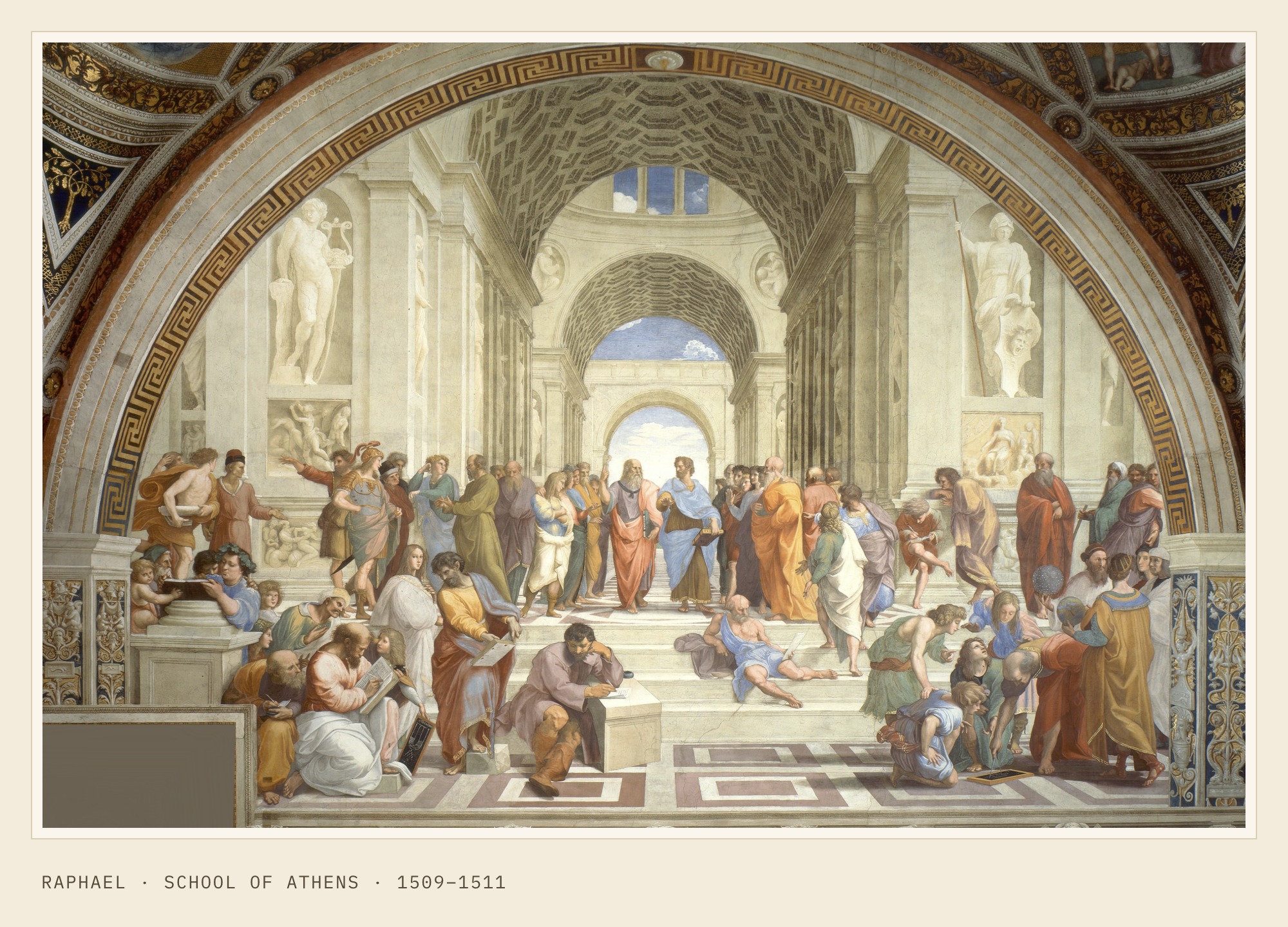
Raphael’s School of Athens gives that possibility a visible form. Thinkers from antiquity occupy a world imagined by a Renaissance artist. People teach, argue, and attend to one another’s ideas. The painting participates in the activity it depicts: receiving an inheritance and making something further from it. An undertaking shaped by particular people becomes a gift to people they will never know.
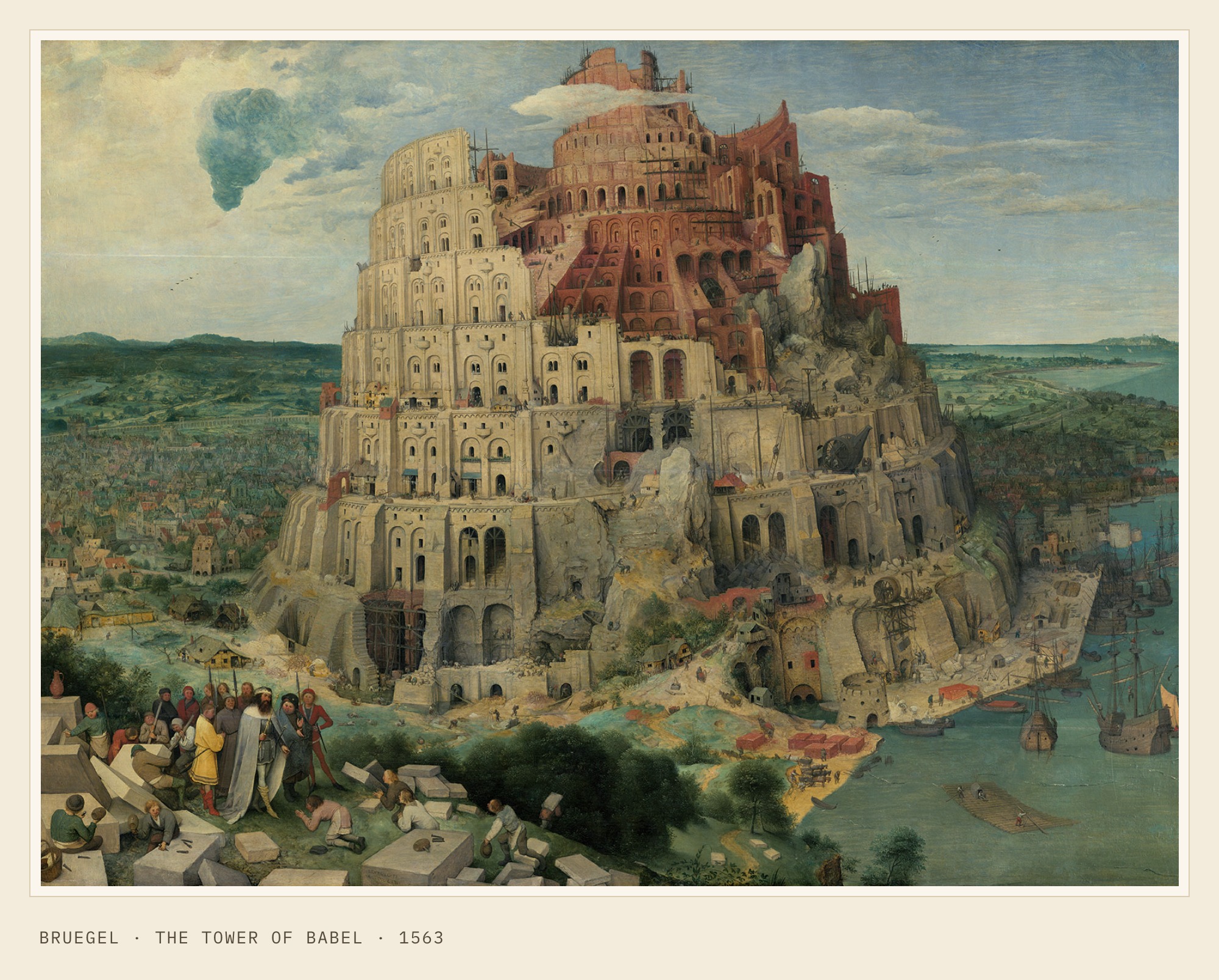
Creation still requires judgment. Bruegel’s Tower of Babel is full of skilled work. The care with which he depicts its construction makes the achievement difficult to dismiss, yet all that ingenuity serves a project whose purpose we have reason to question. Seen through this argument, the painting holds an uncomfortable possibility: people can exercise extraordinary creative ability while losing judgment about what deserves to be built.
A contribution takes its meaning from its relationship to other lives. Private ambition can participate in this. Someone may seek independence, recognition, or the satisfaction of solving a problem, and discover that achieving it requires making something others value. Capitalism gives this relationship a practical form: people commit resources to uncertain ideas, learn whether others value them, and use the returns to attempt something further.
There is a clear moral good in this. A new enterprise can make a tool accessible or enable work that previously seemed impractical. One person’s freedom to attempt something can extend the freedom of others to act. The people who buy a product tell us something about its value; those whose lives it affects may have something else to tell us. The costs it imposes remain part of the judgment.
Success makes this responsibility harder. Consider a business whose achievement brings it customers, capital, and influence over the standards others must follow. Those advantages can support further invention or make it harder for anyone else to enter. Both choices may feel like responsible stewardship. There are employees to protect and years of work at stake. The distinction becomes clearer from the position of someone trying to build the next thing.
Capitalism begins to rot when protecting a particular circle becomes its governing purpose. Wealth and relationships increasingly determine whose ideas receive a hearing and who participates in the returns. There may still be considerable ingenuity within that circle. Ethical deterioration can begin while the economic results look impressive.
Will and Ariel Durant’s The Lessons of History helps me place this change within a longer pattern. They credit capitalism’s capacity to turn savings into productive activity while tracing recurring concentrations of wealth and pressures for redistribution. Their account makes me attentive to how familiar motives change as people acquire power. Attachment grows around an achievement; a family depends on it, a community takes pride in it. Someone who once experienced uncertainty as possibility may begin to experience it as a threat. Success gives its beneficiaries the means to defend their position, while responsibility can supply the justification. Recognizing this pattern gives us a chance to interrupt it.
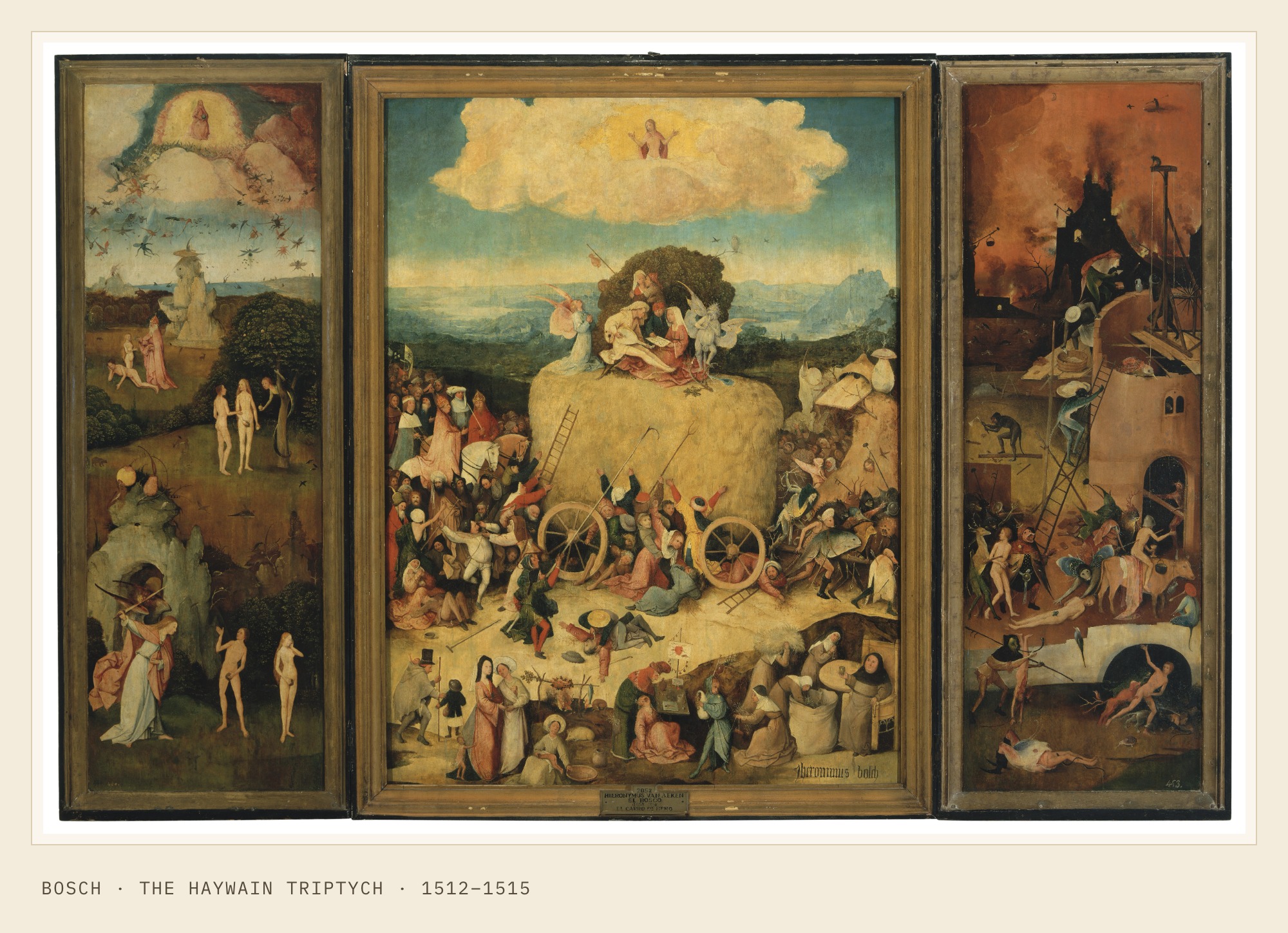
Bosch’s Haywain gives possession becoming an organizing purpose a darker form. People across social ranks pursue transient worldly goods. Its religious warning troubles this argument: we can become so absorbed in securing what we value that we lose sight of the life those possessions were meant to make possible.
Preserving further creation asks successful people to support conditions under which someone else may challenge their position. The work that follows ours may redirect what we built, reveal its limitations, or make it less important. Our commitment to creation is tested by whether we can still recognize value in that possibility.
An ethic this demanding needs institutional support. Education can give people outside established circles the knowledge to participate. Access to capital can allow unfamiliar ideas to be attempted. Rules that incumbents cannot quietly rewrite for their own benefit can keep advantages open to challenge. Continuity matters too: knowledge must be taught, infrastructure maintained, and worthwhile projects supported while their value remains difficult to demonstrate. Further creation includes the patient work of keeping possibilities alive.
Micah Goodman’s lecture on Zionism brings this question into cultural life. Through Ahad Ha’am and Mordecai Kaplan, he describes a people whose civilization consists in what successive generations create. In contemporary Hebrew culture, a language carries earlier layers of Jewish life into new music, humor, and expression. Belonging becomes something people actively contribute to; an inheritance remains alive through their participation.
That gives Zionism an ongoing creative purpose. The establishment of a state makes a shared national life possible; what people do with that possibility continues to matter. There are schools to build, institutions to improve, and forms of Jewish life still to be imagined. The achievement remains open to generations whose circumstances its founders could never have anticipated.
Security and belonging help sustain that life. They can also give people the confidence to encounter disagreement and allow their common life to change. The harder test comes when power affects people beyond the circle through which a national project understands its purpose. Their lives belong within the ethical judgment. Jewish and Palestinian dignity and safety have value in their own right. Cultural achievement cannot cancel an injury or make another person’s rights depend on their usefulness.
The moral claim that remains answerable to our conduct concerns how we exercise power. Inherited achievement can justify confidence in our ability to build; it cannot settle the worth of everything we do afterward. That judgment has to remain open to the people affected, including those whose contributions may unsettle our account of ourselves.
This is the capitalism I find worth defending: a social arrangement that puts resources behind human possibility and remains open to contributions its current beneficiaries cannot foresee. It is also the creative aspiration I want Zionism to continue living up to. The responsibility that begins with creation includes leaving room for people whose contribution we cannot yet imagine—and whose arrival we may find uncomfortable.