Power is easier to exercise when everyone agrees it would be inappropriate to mention it.
An offer of help can carry a desire for control. Envy can find respectable language in an argument about fairness. Attraction can shape a conversation in which both people carefully avoid acknowledging it. We learn which feelings can be spoken about and which have to arrive disguised as something else. Eventually, it can become difficult to tell how much of our judgment is our own, and how much belongs to the people whose approval we have learned to want.
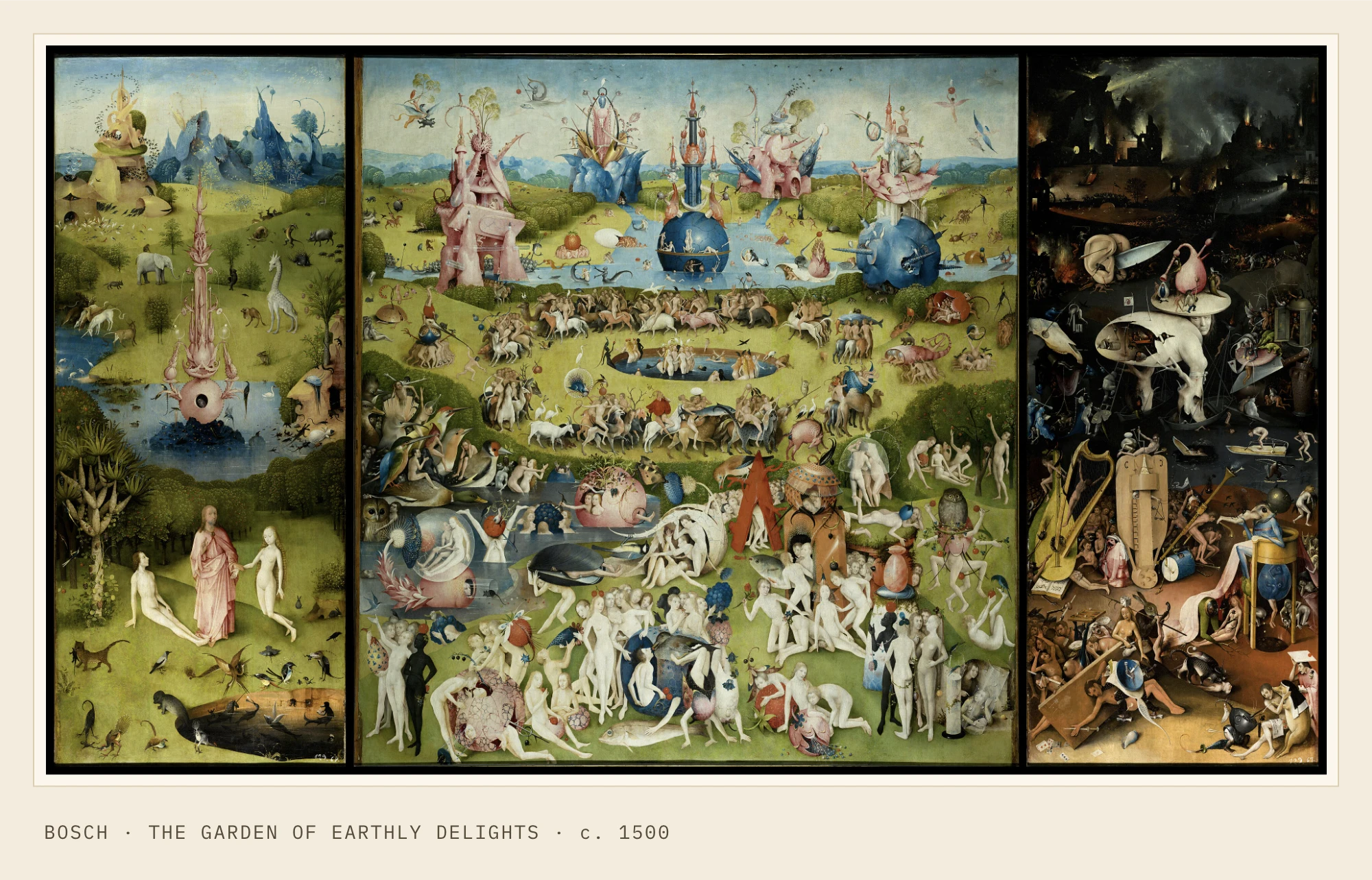
What draws me to Bosch's The Garden of Earthly Delights is that I find beauty in the pleasures it places on the road to Hell. The beauty complicates the warning. In Beyond Good and Evil, Nietzsche turns scrutiny toward the desires behind our moral convictions. I want to bring that scrutiny to my own judgment here: what I call good may owe more than I know to what I find beautiful. And when I help a person or a vision acquire power, that preference begins to shape a world others have to inhabit.
In conversation, I am drawn to the moment someone names what has been left unspoken. Something slightly inappropriate is said, and suddenly there is more to work with. I often begin by offering something of myself: how I am thinking, including where I am uncertain. It gives the other person something they can question too.
Naming what is happening changes the relationship. My interpretation can give someone a way to understand themselves; it can also become something they now have to argue their way out of. Their discomfort doesn't tell me which has happened. They need to be able to say, “That isn't what this is for me,” and make me reconsider. Otherwise I can turn every objection into further evidence that I have understood them.
In Beyond Good and Evil, Nietzsche describes life as seeking to discharge its strength. I recognize something of that in the desire to build: an ability wants to be exercised, an idea wants to be tried, a possibility demands more of the person who sees it. His account of will to power also includes appropriation and domination. The desire to give something a form can reach into other people's lives. Beyond Good and Evil.
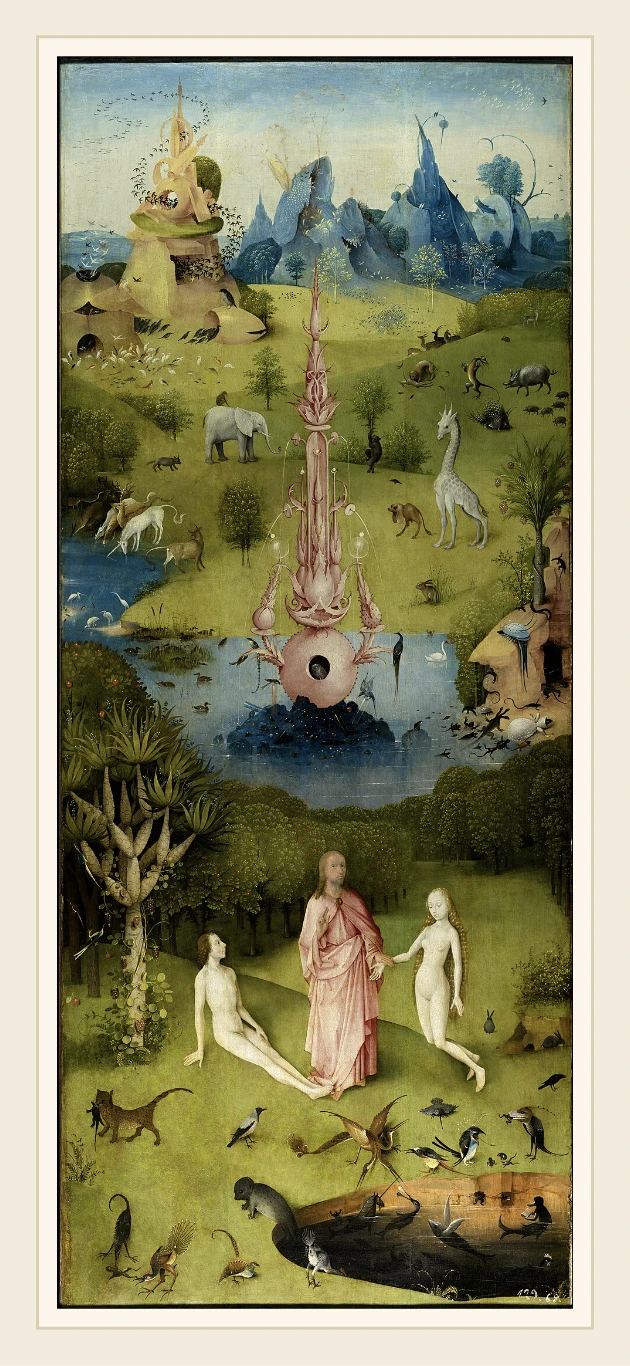
LEFT PANEL · c. 1500
I am drawn to people whose abilities and ambitions demand expression. I want to bring something of my own to that effort. There is pleasure in it, and a wish to matter. I can become so fascinated by someone's mind that I start imagining what they could create. That future becomes vivid. I begin to see how I could participate in it. At some point, I may start supplying the evidence myself.
When I imagine their future, I am already giving it a form. Some of that form comes from what I have understood about them. Some comes from what I find beautiful. The difficulty begins when I can no longer tell which is which. Over my life, I've learned to correct for this through partnership, trusted advisors, and spending time with the person, until I have more to judge than the initial fascination.
That attraction is part of why I do this. I want to help people bring something into the world. My judgment has consequences because I act on it: I commit time, money, and attention to a future I want to exist. Desire acquires influence. What interests me is whether that influence helps another person develop a judgment and a life of their own.
The founders I work with have abundant access to capital. Money is a commodity to them. They have many reasons to choose an investor; the place I want to earn includes how they think about what they are capable of. Trust is at a premium, especially when capital isn't.
I have to bring a judgment they can't get from everyone else. They can then see whether the person in conversation is recognizable in what I admire, what I commit to, and what I follow through on. Courage matters here too. It is easier to have an independent view before someone else's approval matters to you. Can I say what I see when it might cost me their regard, and let their answer change my mind?
Some of that experience happens through play. We follow a fascination, entertain an unlikely possibility, push an idea until it starts to break. There is pleasure in finding someone who can take a thought somewhere I couldn't take it alone. Nietzsche connects maturity with recovering the seriousness a child brings to play. I recognize that absorption: pursuing something with everything available to you, including the willingness to discover that you don't yet know how to do it. Beyond Good and Evil.
Winnicott describes an intermediate area where inner experience encounters a shared world, connecting play to art and creative work. His account of “potential space” emphasizes trust. I recognize something of it when an idea can remain unfinished long enough for someone else to change it. That possibility disappears if one of us has already decided what the other is allowed to mean. Playing and Reality; The Place Where We Live.
For me, sharing how I think is a greater expression of kindness and love than anything else I can offer. It gives another person something they can engage with, challenge, and use. There is vulnerability in it too. They can see the uncertainty underneath a judgment that might otherwise sound complete.
There is something of חברותא, learning in partnership, in this. After Reish Lakish dies, the Talmud describes Rabbi Yohanan's frustration with a new companion who keeps finding support for his views. He misses the partner who raised twenty-four objections, requiring twenty-four answers, through which their understanding grew. But earlier in the same story, Yohanan had used Reish Lakish's past as a bandit to wound him during an argument. The knowledge he had of his friend became something he could use against him. Bava Metzia.
Knowing someone well gives you access to what can move them. The same intimacy can deepen a thought or give an insult its precision. I want a relationship in which that force can be acknowledged and answered. Someone who can resist my account of them gives us something to discover. If every disagreement ends with me defining what they “really” mean, I have made the conversation smaller so that my interpretation can remain intact.
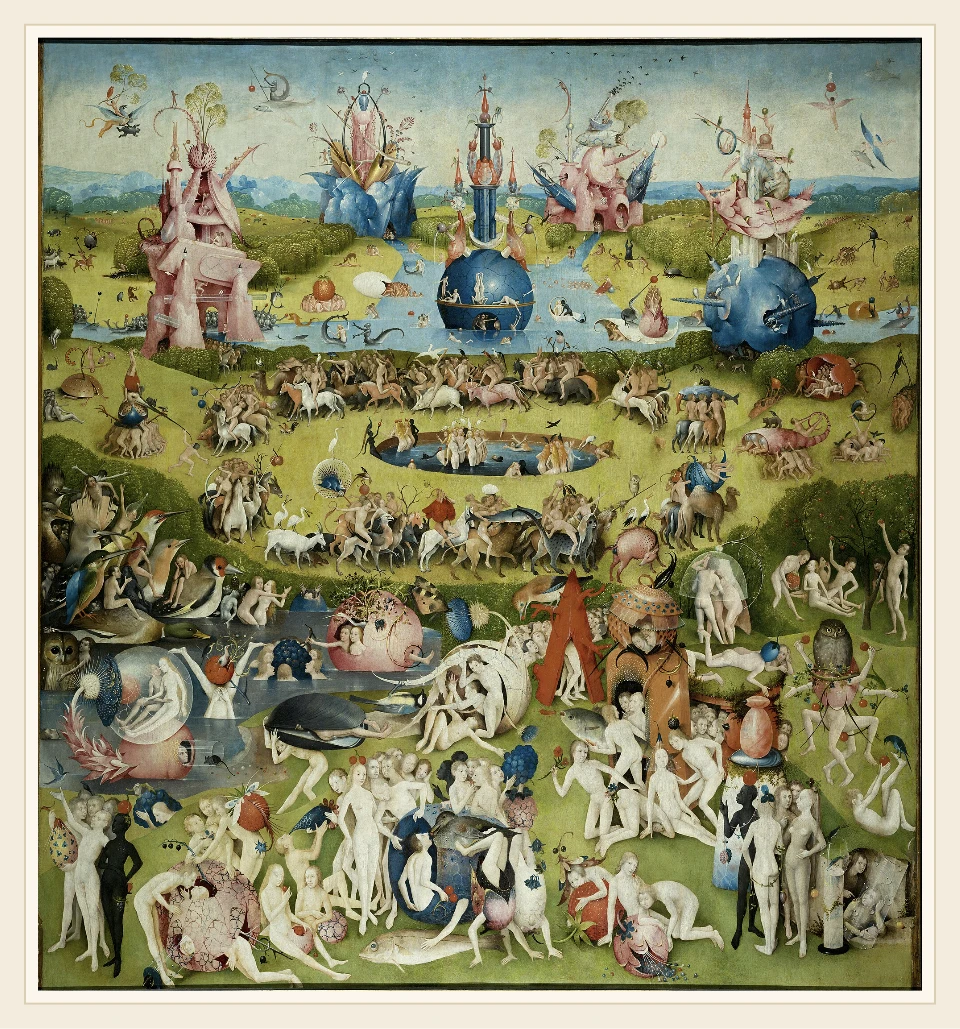
CENTRAL PANEL · c. 1500
Taste gives me a way to understand how someone develops a judgment of their own. It appears in the problems they choose, the work they admire, their language and friendships, the way they carry themselves. It appears in sexuality, in whom they desire and choose as partners, and in the relationships they try to create. Those choices matter deeply to a life. I want to understand what draws someone toward them.
Consistency can make a person recognizable. A change can tell me even more. Someone discovers work that makes an old preference feel inadequate. A relationship changes what they want. Or the people whose approval matters to them start admiring something else. I care about why the taste changed: what was encountered, what was learned, whether the change reflects their own understanding or a desire for someone else's approval.
The person's history matters here. What actually happened gives us a reference point when the story changes. I also want to know what they have made of it. An experience can keep defining a life long after the person has stopped asking what it means to them.
In The Gay Science, Nietzsche describes giving style to one's character: surveying its strengths and weaknesses and working on the whole until a governing taste becomes visible. Some things are cultivated through practice; others are transformed, concealed, or given a different meaning. Becoming yourself involves doing something with the material you have. The consistency I am interested in can emerge through that work. The Gay Science.
A person can give their life a compelling form. I can find that form beautiful before I have understood what it costs them, or what it asks of others. My admiration is already participating in the judgment I am trying to make.
In a company, intensity has to become work. Something has to be built, someone persuaded, a difficult decision made while there is still time to act. I want to understand what a particular person can bring to that effort, and which problems they could solve and care enough about to pursue for years.
Iris Murdoch describes looking out of a window while preoccupied with an injury to her prestige. A hovering kestrel catches her attention. For a moment, the grievance loses its hold. Something outside her own drama becomes visible. Beauty draws her attention toward an existence that has nothing to do with her. The Sovereignty of Good.
A company can begin with that kind of attention. Someone notices a possibility they keep returning to: a neglected problem, an elegant solution, a way things could work. Through that attention, a vision develops. Eventually they want to make it real badly enough to give years of their life to it—and ask other people to do the same. What began with noticing becomes a commitment to make the world different.
I think we often rationalize into ethics what we first find beautiful. We are attracted to a kind of person, a way of living, a possible future, and we develop reasons it deserves to exist. Those reasons may be good. But I want to understand how much of their authority comes from the attraction that preceded them.
Nietzsche gives this suspicion a sharper form in The Gay Science. He treats changes in opinions, with their proofs and refutations, as symptoms of changes in taste. He then describes powerful people imposing their preferences until others acquire them as habits. A personal judgment becomes something people cease to experience as a choice. The Gay Science.
Power lets these preferences shape other people's lives. A founder's taste becomes decisions about what gets built, who gets hired, which ambitions have room to develop. An investor helps some visions acquire the means to become real. Our account of what is beautiful begins to organize a world that other people have to inhabit.
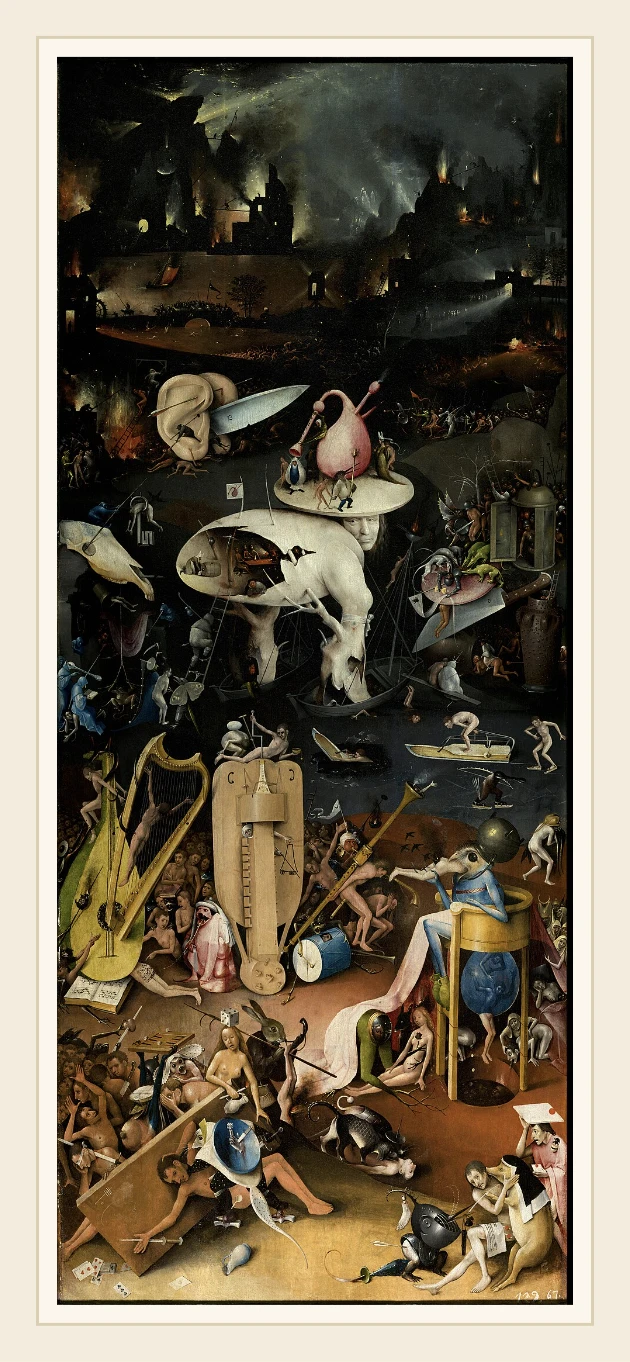
RIGHT PANEL · c. 1500
That is why I keep returning to what the person actually does, especially when it is harder to reconcile with the future I have imagined. I can be moved by a vision and still need to see what happens when it becomes a decision. What did they choose? What followed? What are we now able to see that the original attraction made difficult to notice?
In The Ethics of Creation, I wrote about responsibility for what our work may become beyond our intentions. However perceptive I become, my vision is still formed by a particular life. Someone else may see a possibility in the work that I missed, or a limitation I couldn't bring myself to recognize.
Nietzsche makes a distinction in On the Genealogy of Morals that sharpens this for me: the origin of something does not settle its later uses and meanings. Other powers take hold of it, reinterpret it, and give it new purposes. What I help create can acquire a life that makes my original intention less important. On the Genealogy of Morals.
I want to leave room for that possibility from the beginning. It asks something of how I hold power now: whether people can challenge a judgment, redirect the work, or develop an ambition I wouldn't have chosen for them. I want to commit fully enough to make something consequential. I also want it to remain open to a future whose meaning I don't get to settle.
The same is true of a person I back. I want to participate in what they become. Their life may develop in a direction that makes my original understanding of them inadequate. They may need something different from me, or need me less. What happens to my enthusiasm then?